Naeem's book 2020
Midnight’s Third Child, Naeem Mohaiemen
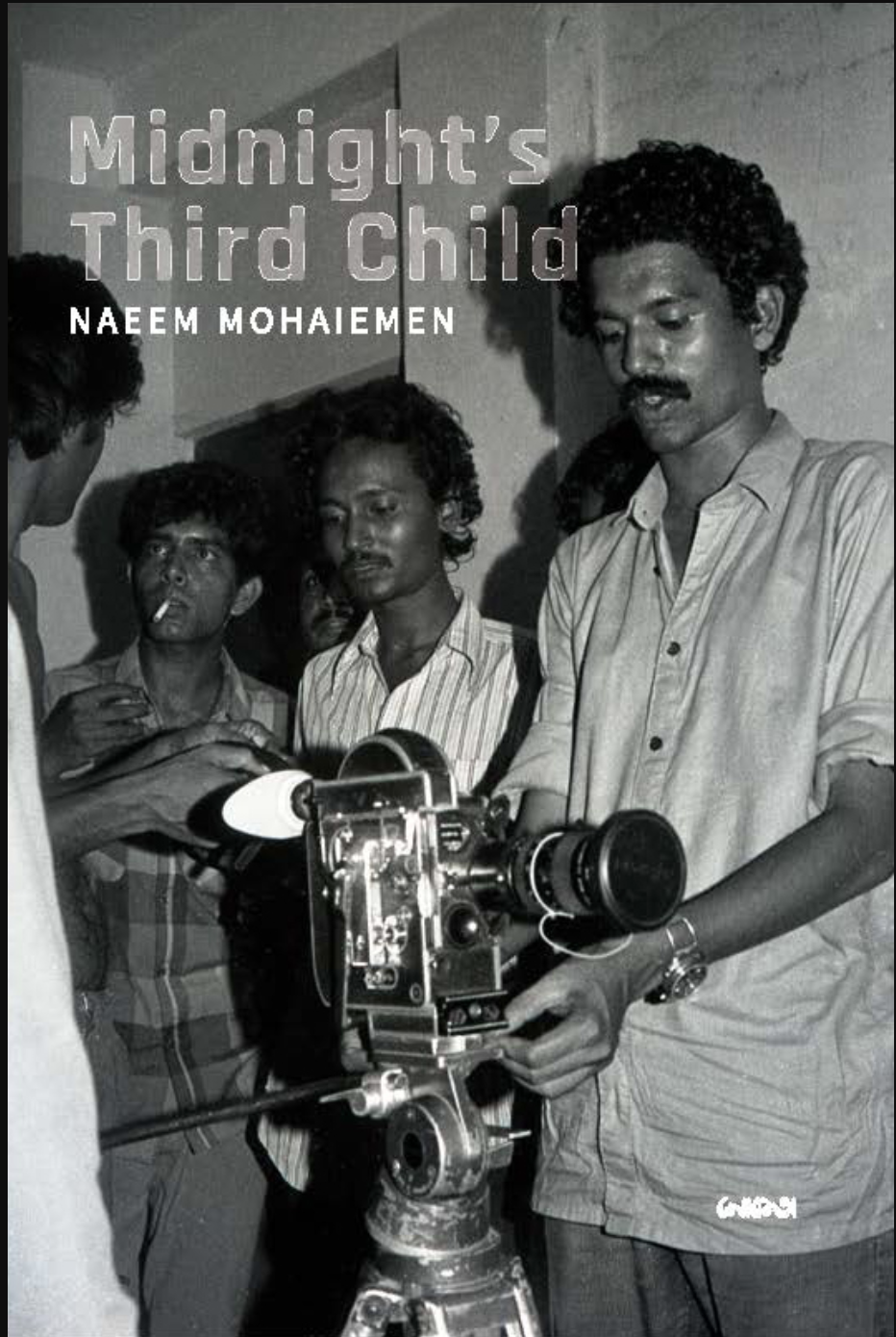
Book cover Image by Ali Morshed Noton, courtesy of Tareque Masud Memorial Trust; pictured (l to r): Tareque Masud (1956-2011), Dhali Al Mamoon (1958-), unknown, Syed Sajjad Hossain Jyoti (1959-missing 1993), Mishuk Munier (1959-2011); during filming of Masud’s ‘Adam Surat’ (1989) on artist S M Sultan (1923-1994), at Audiovision office, Lalmatia, 1986.
Midnight’s Third Child draws its inspiration from the book of the same name by Naeem Mohaiemen. "Midnight's third child" is a polite translation of the Bangla phrase: chagol'er tritiyo baccha lafay beshi (the goat's third child jumps more). The sentence suggests that the youngest needs to strive for maternal sustenance, and it also proposes a clarity of purpose from being the last born. Bangladesh has existed under three signs– “East Bengal” under British India until 1947, “East Pakistan” under United Pakistan until 1971, and “Bangladesh” after the liberation war of 1971. Given these movements, reversals, and renewals, the idea of Bangladesh remains contingent and contested. Cultural workers can reinforce essentialist ideas around this, or they can choose to challenge majoritarian views. The people, projects, and conversations in this anthology frequently take on a role of speaking back to power.
An anthology of essays by Naeem Mohaiemen on artists and movements, with introductory essays by Tanzim Wahab and Zirwat Chowdhury.
Subjects featured in the anthology: Hegemony, Chittagong Hill Tracts, Joydeb Roaja, Juktakkhor, Mrinal Sen, Louis Kahn, Salauddin Ahmed, Dhali Al Mamoon, Cheragee Pahar, Adman Blues, Musee Guimet, Social Realism, Shahidul Alam, Pathshala, Shumon Ahmed, Chobi Mela, Tareque Masud, S M Sultan, Molla Sagar, Rubaiyat Hossain, Amit Ashraf, Runa Islam, Sarker Protick, Depart, Razib Datta, Abir Shome, Firoz Mahmud, Taslima Nasreen, Numair Choudhury, Zia Haider Rahman, and Tayeba Begum Lipi.
Publisher: Nokta, Dhaka, Winter 2020
‘A powerful tool too for anyone… looking for stepping stones towards the individuals and organisations that make up the still largely veiled histories of contemporary art in Bangladesh, as well as an eloquent argument for the potentials of art in many other territories.’ Mark Rappolt, Art Review
Order the book online