The Slow Frame: Duration, Stillness, and the Expanded Moving Image in Bangladesh
Imran Firdaus, 2026
"...We say that…moving image works, and especially when they are moving slowly, give the viewer the gift of time, time to observe simple objects, or slowly evolving events, or ideas unfolding, or realisations that become understanding." — Kira Perov (Borusan Contemporary, 2019)
"I spend a lot of time observing it [time]. My real art director is time." — Tsai Ming-liang (Shuv, 2013)
"Documentary as a concept or practice occupies no fixed territory. It mobilises no finite inventory of techniques, addresses no set number of issues, and adopts no completely known taxonomy of forms, styles, or modes." — Bill Nichols, Representing Reality (1991)
An undocumented screen
Three claims sit behind this essay, and none of them belong to Bangladesh specifically, which is what makes them useful as a starting point. Photographer and arts administrator Kira Perov's gift of time treats slowness as an act of generosity, something offered to the viewer rather than withheld from a faster, more efficient version of the same film. Filmmaker Tsai Ming-liang relocates authorship itself: if time is the art director, duration is not a stylistic decision made about a work so much as the governing intelligence behind it. Film critic and theoretician Bill Nichols, writing about documentary rather than slowness as such, insists that the form claims no fixed territory, no closed inventory of technique, no settled taxonomy of style, which amounts to a refusal to let anyone decide in advance what counts as legitimate practice. Read together, these three positions frame the questions this essay is actually asking. What is being offered, and to whom, when Bangladeshi artists slow the moving image down. What governs a body of work when duration itself, rather than plot or argument, is doing the directing. And what territory this practice occupies, given that its own field, spanning film society inheritance, video installation, and essayistic documentary, has never been mapped as a whole.
Those questions matter because the practice they describe already exists in some quantity. Bangladesh has produced a substantial body of moving-image work over the last three decades, by visual artists, documentary filmmakers, and expanded-cinema practitioners alike, and almost none of it has been critically documented as a coherent field, in English or in Bangla. But traceable in fragments.
International scholarship on artists' moving image has grown considerably over the same period, leading scholar on experimental and artists' film Sarah Smith authored Artists' Moving Image: Cinema as Archive (2026) through Bloomsbury publication, filmmaker, programmer Roger Beebe's running debate over “artists' cinema” against “video art” in contemporary art journals like Brooklyn Rail, and the Paul Mellon Centre's 2015 conference on the subject titled Artists' Moving Image Practice in Britain: From 1990 to today. Bangladeshi practice is largely absent from these conversations. The exceptions tend to be diaspora figures such as Runa Islam (b.1970), Dhaka-born but London-based, whose structural film work has drawn sustained international attention precisely because it developed outside Bangladesh.
This essay focuses on practice rooted in Bangladesh from the late 1990s to the present, with particular attention to slowness as a formal strategy, to the undocumented history of video installation, and to the persistence of a cinephilic formation in how visual artists think about the moving image. Two frameworks structure what follows: Gilles Deleuze's (1985) concept of the time-image, and Doreen Massey's (1992) account of stillness not as stasis but as duration, as a form of becoming in place.
A note on scope is necessary here, and it is not incidental to the essay's argument. The artists discussed below are illustrative of this field rather than exhaustive of it. A definitive account of contemporary Bangladeshi moving-image practice does not yet exist in the critical literature, which is precisely the condition this essay sets out to describe, and any single essay, this one included, will necessarily reproduce a version of that incompleteness even as it argues against it. One absence is worth naming directly: animation as a distinct branch of the expanded moving image in Bangladesh, with its own genealogy, institutional history, and formal relationship to duration, falls outside what this survey has been able to cover and warrants sustained treatment in its own right. What follows should be read as a working sample broad and varied enough to support the essay's central claims about slowness, absence, and institutional fragility, not as a canon, and the exploration this essay calls for at its close is in part the work of testing, correcting, and extending that sample.
Formation: the film society, the auteur, and the artist
The sensibility this essay calls slowness was not self-generated. It was shaped by a specific, auto-didactic cinephilic formation, one built through film societies, pirated discs, and cultural-centre screenings, that left identifiable formal imprints on how artists came to conceive of the moving image.
The film society movement in Bangladesh dates to 1963, when the Pakistan Film Society (later the Bangladesh Film Society) began operating as, in one account, a curator and disseminator of knowledge, mediating between cinephile communities through screenings of genre film, film movements, and experimental cinema that no formal institution was otherwise providing (Raju, 2014; Hoek, 2021). From the 1990s, pirated VCD and DVD circuits extended this informally, opening an entire arthouse canon, Bergman, Godard, Tarkovsky, the Iranian New Wave, to a generation of visual artists who would otherwise have had no access to it. That formation was uneven and specific to its moment, but its consequences for how artists learned to use duration have proven lasting (Firdaus, 2023).
Video installation in Bangladesh appears to have taken shape along two related but distinct paths. One is institutional: workshops run by the Britto arts collective in the mid-to-late 2000s trained a first generation of artists working specifically in the medium. The other is individual, and slightly earlier where the artist's own shift from painting into performance, video, and digital work at a point when almost no gallery infrastructure existed to support it. That second path draws less on cinema and more on the body art and performance traditions of 1990s international art, filtered through a Bangladeshi critical cultural lens. Together, the two suggest the medium had more than one point of origin locally, and that its early development owed as much to individual experimentation as to organised training.
That cinephilic influence has its own lineage, running from Zahir Raihan's Stop Genocide (1971) to Alamgir Kabir's wartime and post-liberation films, through Morshedul Islam's Chaka (The Wheel, 1993) to the later work of Tanvir Mokammel, Yasmine Kabir, and Naeem Mohaiemen (b.1969). Alamgir Kabir, in particular, stands as the foundational precursor of local ‘art house’ cinema. Long before contemporary visual artists used duration to challenge hyper-accelerated media, Alamgir Kabir imported cinematic slowness as a radical ideological and aesthetic tool, using deliberate pacing to dismantle the loud, melodramatic conventions of Dhaka's industrial films. His work bridges the gap between post-independence political cinema and today's moving image practices. What artists absorbed from this line was less a set of subjects than an aesthetic-political commitment to form, above all a respect for duration and observation over spectacle and narrative resolution. Mokammel's (2018) own phrase for this is muktodoirgho cholochhitro, free-length film: freedom from temporal linearity as a working principle rather than a stylistic flourish.
The slow frame: stillness as method
Slowness in Bangladeshi artists' moving image is not an import from global slow cinema. It has local material conditions, aesthetic genealogies, and political stakes that call for analysis on their own terms. Deleuze's (1985) time-image is useful here: in classical, action-driven film a character acts and the camera follows the consequence, but the time-image occurs when a subject is placed in a situation where they can no longer act, only watch, remember, or endure, foregrounding what Deleuze calls pure optical and sound situations over sensory-motor ones. Read through Massey (1992), the stillness this produces is not stasis but duration, a becoming in place rather than an absence of movement.
Chottogram/Dhaka based Yasmine Kabir's work remains the clearest case study of that shift from action to observation. In A Certain Liberation (2003), the protagonist genocide survivor Gurudasi Mondol wanders without any forward-moving plot through the spaces of rural Bangladesh, her wandering less an event than the visible form taken by an unresolved 1971 war trauma; the camera simply records her coexistence with a past that has not faded. My Migrant Soul (2000) reaches a comparable effect through sound: audio letters a migrant worker once sent home are threaded through the film so that a recorded voice of hope collides directly with a tragic present, and time starts to feel circular rather than progressive. In The Last Rites (2008), duration turns physical: long, uninterrupted takes of barefoot labourers carrying steel sheets refuse to cut away early, so the viewer experiences something closer to the actual time the labour itself takes, an effect repeated in her footage of the ship-breaking yards of Chittagong, where enormous vessels are dismantled slowly enough that their disassembly comes to mirror the slow erosion of the workers' health. Yasmine has spoken of building what she calls a cinema of the 'unspoken' (Ahmed, 2021), stripping away voice-over so that silence and ambient sound expand the viewer's sense of time and force an active, rather than passive, kind of looking.
Munem Wasif (b.1983) works from the same premise toward a more embodied register. In Kheyal (2015–18), he tracks four characters moving through the internal and external spaces of Old Dhaka at a pace closer to glacial than cinematic, a figure staring blankly out a window or navigating a dark corridor doing more argumentative work than any event in the film (Wasif, 2015–2018). Because its chronological narrative is left loose and fragmented on purpose, time stops behaving like a line moving forward and becomes instead a heavy atmosphere shared between the architecture and its inhabitants, an archive of a living city in which past eras bleed into the present rather than giving way to it. Machine Matter (2017) turns the same method on Bangladesh's dying state-owned jute industry: long, unhurried takes hold on frozen industrial cogs and abandoned factories rather than reaching for the fast, journalistic montage that a story about protest or closure would ordinarily invite, and the slow panning across rusted iron and the skin of former workers merges man and machine into a single, enduring monument to loss (Wasif, 2007–2017). Munem has framed this explicitly as a political choice, a refusal of the pace at which global media typically consumes crises in the Global South, and a demand that the viewer become an active witness rather than a passive consumer of information.
A second cluster of practitioners pushes the same logic outward, into technology and ecology, extending the time-image beyond the frame of conventional video and giving the essay's title, the expanded moving image, its fullest sense. Ronni Ahmmed (b.1971) treats video installation as a vehicle for a conception of time that moves from an earlier occult sensibility toward an explicitly Sufi one. His Seven Hundred Miles of Sleep Walking (2013) embodies a profound intersection of time-image and spatial duration, transforming the act of sleepwalking into a radical form of becoming. Instead of treating sleepwalking as passive movement, the work uses multimedia animation to construct an environment where time and space collapse into pure interiority. Taslima's Garden (2021), meanwhile, used drones, GoPro footage, and virtual reality, technologies built for speed, and stripped them of their usual high-octane rhythms, forcing them instead into a steady, drifting gaze. In The Seventh Mokam, this drift becomes explicit: the installation links the historical roots of Sufism to digital VR frameworks and suspends both inside the viewer's immediate present. Ahmmed has described the artist's mind as a kind of time traveller oscillating between past, present, and future, and his recurring imagery of shrine motifs, rickshaw art, and looping devotional forms, echoing the repetitive structure of dhikr, gives that oscillation a local register rather than a generic mysticism (Idrak, 2021).
Nazia Andaleeb Preema arrives at a comparable point through performance. As an early practitioner of new media and performance art in Bangladesh, Preema treats her own body as an active canvas, and her relationship to time is worked out through durational performance and digital manipulation rather than any single technique (Bose, 2015). In works such as Jolkonnya (Water Goddess, 2023), calculated endurance and sustained poses, held over long durations, disrupt the fast-paced gaze that ordinarily processes the female form: by stretching a gesture out, she alters the viewer's perception of speed and reclaims the body from immediate, consumerist consumption, so that it ceases to be a static object and becomes instead a changing, fluid environment shaped entirely by time. Her video installations extend this logic into what might be called a ‘Chronos split’, layering the body's organic, real-time movement against its own digital replication, looping in virtual space. The resulting images, a slow-motion cry, a gaze held through a veil, unshackle expression from any specific narrative, freezing the emotional state into what Preema frames as an enduring, collective monument of female resilience; the effect closely echoes the time-image, trapping the viewer between competing temporal planes rather than letting it resolve into either. Across both registers, Preema positions slowness not as a technical choice but as a political defense mechanism, one that, in an era dominated by instantaneous digital media, turns the durational image into an open archive of memory, endurance, and quiet defiance.
Zihan Karim (b.1986, Chottogram) arrived at video through painting, describing the shift as a discovery that filmmaking required combinations of art forms he didn't yet have (Adnin, 2019). Working through JOG art space and Porapara, the alternative infrastructure outside Dhaka, Zihan represents a decentralisation this field rarely gets credit for. One of his earliest works such as A simple Death (2012) projected video onto the exact spot where a labourer had died unnoticed in a Chottogram settlement, duration functioning as mourning and confrontation at once (Siddiqua, 2017). In Habitat (2013), extended footage of children in Chittagong's squatter settlements refuses sentimentality (Karim, n.d.); in the later multi-channel Stab in the Dark (2023), made during his postgraduate study at Goldsmiths, he speculates around a real disappearance through the idiom of jatra, Bengali folk drama, folding a specifically local form into an international video-installation language (Artists' Moving Image, n.d.).
Rasel Chowdhury (b.1988), whose landscape photography has been recognised with the Samdani Art Award, a Getty Images Emerging Talent Award, and an Ian Parry Scholarship, extends a comparable durational logic from still photography into moving image. Series such as Desperate Urbanisation and Railway Longings already worked through fixed long shots of toxic waterways, brick kilns, and abandoned rail corridors; his move into video keeps that same fixed, patient frame trained on a stretch of countryside, shifting smog, or a decaying structure for minutes at a time. The argument is as much personal as environmental: ecological violence, unlike the discrete events television news is built to cover, unfolds slowly, over generations, and Rasel treats that slow, granular change in a landscape's everyday texture as the subject itself rather than an obstacle to reaching it. His camera, in effect, tries to read the pulse of an urban landscape one small change at a time.
Naima Karim (b.1976) takes the same premise into virtual reality, where slowness becomes an interactive requirement rather than a shooting choice. Her VR film The Anticipation of Rain (2022) recreates a year she spent immobile with Guillain-Barré syndrome, watching the sky; the piece runs seven minutes with clouds morphing, darkening, and releasing a monsoon as its only action, time itself standing in for plot. Mirage (2025), which premiered at the Venice International Film Festival 2025, uses hand-tracking to slow the viewer's own gestures inside a desert landscape built to represent a teenager's anxiety and depression: fast, aggressive movement simply fails to register in the environment, so the interface itself compels a meditative pace. Naima paints these worlds by hand inside virtual space with tools such as Open Brush, carrying a fine-art practice of long, sweeping brushstrokes into an immersive medium, and adds scent and haptic feedback to keep the viewer's body tethered to a space built around waiting rather than moving through.
What these practices share, from Munem's old Dhaka and Yesmine's rural witness to Ronni's devotional loops, Rasel's rivers, Preema's body as canvas, and Naima's VR deserts, is a use of slowness as a structural rather than individual tendency, one carried across media, from 16mm and video to virtual reality, rather than treated as a property of film alone. In a society defined by the speed of urban transformation, industrial collapse, and political volatility, to move slowly, whatever the apparatus, is to insist on the visibility of what is being destroyed, overlooked, or suppressed.
This same imperative has recently found an unexpected echo outside the field entirely. Pope Leo XIV's (2025) recent address to filmmakers and artists frames it in explicitly moral terms, calling on artists to defend "slowness when it serves a purpose, silence when it speaks, and difference when evocative," and to resist algorithm-driven, immediate content in favour of a cinema that functions as a "laboratory of hope," one that challenges rather than merely consoles its audience. Read alongside the Bangladeshi practices discussed here, this call reframes slowness not as an aesthetic preference but as a form of ethical resistance: a refusal of the pace demanded by both spectacle and erasure.
The archive of absence: essayistic form and unretrievable histories
If slowness is this practice's formal signature, absence is its recurring subject: missing archives, suppressed histories, undocumented lives, and the essayistic and documentary modes artists use to navigate what cannot be retrieved.
Naeem Mohaiemen's practice is built almost entirely around this condition. For example, his Two Meetings and a Funeral (2017) is a meditation on the failure of the Non-Aligned Movement (NAM), constructed from archival footage and slow, essayistic juxtaposition.
His more recent A Missing Can of Film (2025), shot inside the Bangladesh Film Development Corporation (BFDC), revisits the rumoured disappearance of a 16mm reel belonging to Zahir Raihan, the founding figure of Bangladeshi alternative cinema who himself disappeared in 1972. Naeem has called the work an agonisingly slow search for a mythical film reel (e-flux, 2026). The image does real argumentative work here: the missing can stands in for the entire undocumented body of Bangladeshi moving-image practice, not only for Raihan's own.
Omar Adnan Chowdhury (b. 1984) pushes this same problem into a conceptual register. Where Naeem works through the disappearance of an object, Omar treats slowness itself as the instrument, close to what he calls ‘historical vertigo’: stripping the moving image of rapid cuts and plot so duration exposes repression, faulty memory, and unstable historical truth (Hoek, 2025). Augustijn (2019) pushes the same problem into structure: scenes and monologues repeat with only minor variations, unsettling memory and blurring fiction into real-time documentation (NW Aalst, 2019). A further friction runs between what his films show and say: controlled cinematography set against layered voice-over, and static frames on buildings held long enough to feel like they carry the history they've witnessed. Janus Tussle (2023), his British Council and Arts Council England-commissioned installation on a fictional antiques trade between Bangladesh and Paris, extends this into diaspora: losing one's footing in time is itself the closest representation of a history actively obscured. His latest short film BAN♡ITS (2024) tracks outlaws on the lawless Bangladesh-India border who obsessively re-enact Heath Ledger's Joker (Busan Biennale Organizing Committee, 2024). By prioritising psychological reflection over linear action, it unfolds through the time-image. The narrative fractures cause-and-effect. Viewers experience time through memory and internal states, not through plot progression. Within this structure, the borderlands are an example of Massey's (1992) stillness as duration. The characters' physical stagnation is not empty stasis. It is an active "becoming in place." Their waiting is a dynamic temporal flow, where local resistance and existential identity keep generating from a single place.
This essayistic mode extends across still other registers, and into media that sit outside film altogether. Dilara Begum Jolly's (b.1960) multi-disciplinary practice, spanning painting, sculpture, and performance, is anchored in an almost unbearably slow, repetitive technique: needle-pricking thousands of individual holes into paper, x-rays, archival photographs, and lightboxes, a method that borrows its rhythm from the rural tradition of nakshi kantha embroidery. The labour itself is a form of defiance, forcing a structural slowdown in both production and reception that functions as a quiet, rhythmic protest against the historical erasure of marginalised women, while the tactile rupture of each piercing works directly against the passive illusion of the flat photographic surface. Her work engages explicitly with the time-image in this sense: not a linear vehicle for plot, but a layered, heavy presence that forces contemplation, presenting history not as sequence but as a deep, overlapping psychological wound. In exhibitions such as Excavating Time (2006) and Parables of the Womb (2020), she pierces photographs of Biranganas, the women recognised as war heroines of 1971, so that the past is made to emerge directly into the viewer's present rather than staying safely behind glass, operating less as documentary record than as pure Deleuzian time-image. Jolly transformed her performing arts into video works centered on contemporary social issues. Over the years, the artist produced several notable installations, including Bhetor Bahir, Shilara, Tazreennama (2014), and Ghore Baire (Rayhan, 2018). Her seven-minute video work Tazreen Nama (2014), a response to the Tazreen garment factory fire, carries the same logic of endurance into the video-essay form and produces what one critic has called a poetics of endurance (Yasmin, 2021).
Reetu Sattar carries this same commitment to endurance from the archive into the live body. Trained in theatre, the Dhaka-based interdisciplinary artist and filmmaker weaponises slowness and expanded time within her moving image practice to challenge traditional pacing and standard cinematic perception. By using lingering long takes, fixed framing, and stagnant setups, she treats time as an illusion, shifting the viewer's experience from passive consumption to active, durational endurance. Her fixed camera captures the somatic exhaustion, vulnerability, and micro-movements of live bodies performing highly repetitive, physically draining tasks over extended stretches. This deliberate deceleration opens a space to unearth missing archives, post-colonial trauma, and endangered cultural elements in Bangladesh, while rejecting hyper-accelerated capitalist consumption. Her practice also collapses the boundaries between human anatomy, static spaces, and sculptural installations, turning the slowed-down body into a temporal monument. This structural manipulation of time is exemplified in her work Harano Sur (Lost Tune, 2018), which documents a durational performance initially staged at the Dhaka Art Summit 2018. The work features musicians sustaining a slow, drone-like audio repetition on the harmonium as a metaphor for cultural control and modern social upheaval (Liverpool Biennial, 2018). Similarly, her video work Shabnam (2023), screened at the International Film Festival Rotterdam (IFFR) 2023, uses extreme slowness, disjointed audio pacing, and delayed subtitles to confront environmental breakdown and dispersed archival histories. Reetu’s work, in this sense, is a meditative counterweight to the chaotic pace of modern Dhaka.
Laisul Hoque, working between London and Dhaka, extends the same set of concerns into diasporic memory and the senses. His installation An Ode to All the Flavours (2024), winner of the East London Art Prize, lingers on domestic ritual, food preparation, and the material texture of a household rather than advancing any storyline, using that structural slowness to make memory and inherited history feel physically present rather than merely described. His 2026 exhibition The Ground Beneath Me pushes further still, relocating his own London residence into the gallery during a temporary return to Bangladesh, so that memory, household objects, and moving image combine into work judges described as quietly political. Jan Verwoert's (2003) concept of the essayistic installation, research material presented in non-linear, spatially distributed form that works as a network of cross-references rather than the linear logic of a scientific paper, describes what all of these practices, Naeem's, Omar's, Jolly's, Reetu's, and Laisul's, are doing formally, whether the material each is working with is archival footage, pinpricked photographs, a durational performance, or a relocated bedroom.
Undocumented histories and institutional fragility
The shift from moving image as cinema to moving image as gallery installation is one of the most significant structural changes in Bangladeshi contemporary art since 2002, and it has not been documented as such. Before Britto's first workshop, video in an art context was largely confined to the new-media experiments of Dhali al Mamun and Mahbubur Rahman. After it, an entire generation began working primarily in installation.
This absence of documentation is not neutral; it functions as a form of erasure. Unlike the UK, where the Paul Mellon Centre's programme and the Bloomsbury series have begun to construct a history of artists' moving image, Bangladesh has no equivalent archive, no critical monograph, and no institution systematically collecting this work. The Asian Art Biennale's early exclusion of photography and video from its rules (Clark, 2025) is symptomatic of the same institutional resistance.
Geography compounds the problem. The video installation turn in Bangladesh was never solely a Dhaka phenomenon, yet Dhaka's institutions such as Britto, the Dhaka Art Summit, Chobimela remain far more visible internationally. Zihan's Chittagong-based practice, and the JOG and Porapara infrastructure that supported it, stand as a reminder that any serious mapping of the ecosystem must name Chottogram as a second centre of experimental practice rather than a footnote to it.
A further layer of this map, and one still more thinly documented, is being built by a young generation of Indigenous filmmakers and moving image practitioners working out of the Chittagong Hill Tracts. Adit Dewan co-founded and directs the Hill Film Festival, held biennially in Rangamati and Dhaka since 2014, alongside his own hybrid filmmaking, most recently Not Only the Ants' Story (2024). Santua Tripura works as filmmaker and photographer and now leads Ruwang Collective Arts, an initiative organising Indigenous artists across the region. Shuvashish Chakma and Turin Tanchangya are among the documentary and hybrid filmmakers working alongside them. For this generation, the Hill Film Festival and Ruwang Collective Arts function much as JOG and Porapara did for Zihan: informal, community-built infrastructure standing in for an archive that does not yet exist. Their near-total absence from existing accounts of Bangladeshi artists' moving image is not evidence of marginality within the practice itself, but a further symptom of the same institutional resistance to documentation traced above.
This pattern extends beyond geography, too, into a wider condition across the field: considerable practice, considerable international exhibition, and still insufficient critical writing. Naima Karim's VR installations, which have premiered at Venice and IDFA, sit in a similar position, visible on the international festival circuit while remaining largely undiscussed in Bangladeshi critical writing. Other practitioners, Rasel Chowdhury among them, are known locally through fieldwork and exhibition circuits without yet being indexed in any published account. Their absence from the critical record is not a gap at the margins of the field; it is close to the field's defining condition.
Documentation as a curatorial act
Slowness is this practice's formal signature. The archive of absence is its recurring subject matter. The undocumented, still-expanding turn toward installation is the ecosystem that holds both together. Read separately, each looks like a stylistic preference or a historical footnote. Read as a field, they describe a body of work that is geographically dispersed, generationally layered, and institutionally underserved, but coherent enough to demand sustained critical attention.
The two frameworks that opened this essay are also the ones best placed to close it. Deleuze's (1985) time-image describes a cinema in which action stops mattering and duration itself becomes the primary thing on screen; read across the field rather than within any single work, something similar happens to this essay's own object. The practices gathered here, from Yasmine Kabir's wandering sensibility to Naima's VR deserts, from Naeem's missing reel to Reetu's drone-like harmonium, do not add up to a developmental sequence in which an industry matures, professionalises, and eventually gets documented. They coexist, unevenly and without resolution, the way a time-image holds several temporal layers inside a single frame rather than resolving them into a before and an after. Tsai Ming-liang's claim, quoted at the start of this essay, that time is his real art director, applies just as well to the field as a whole: what has directed its development has not been institutional planning but duration itself, practice accumulating steadily in the absence of the infrastructure that would normally organise it into a history.
If Deleuze (1985) accounts for why this field resists a linear, developmental story, Massey (1992) accounts for why it resists a single centre. The field traced here is closer to what she calls an unthought cosmology: a spatial arrangement that is lived and felt long before it is critically mapped. The task has not been to treat that space as a surface already crossed, but to insist on an active, curatorial documentation, to move from critical passivity toward a rigorous reclamation of visual history. Following her proposition that space is the product of interrelations and embedded material practices, the Bangladeshi moving image emerges here not as a "backward" industry waiting to join a Western historical queue, but as a relational site, constituted through interactions that range from the docks of Chottogram or the hill tracts to the global diaspora, where creative practice is embedded in the fabric of post-colonial existence. The three trajectories this essay has traced, the inheritance of the film society movement, the millennial surge of video installation, and the emergent archive of absence within the contemporary essayistic moving image, are not separate histories but different stories-so-far within a single, still-unfolding space. Held together, Deleuze's duration and Massey's dispersal, they begin to turn the moving image from a collection of isolated artefacts into a relational map of a living culture.
What that attention requires is concrete: documentation in both English and Bangla, archival preservation of video works that remain physically at risk, curatorial programming that sets local practice inside international discourse rather than apart from it, and institutional reform at the level of biennale rules and fine arts curricula. Curator and artist Kehkasha Sabah's 2025 exhibition Where the Spirit Meets the Bone, supported by the British Council, offers one recent instance. Its second chapter installed two commissioned workshops, led by Zihan Karim and Shohrab Jahan as active educators, with participating artists drawn from the Institute of Fine Arts, University of Chittagong. It is a small but concrete institutional home for exactly the kind of curatorial documentation this section is calling for, though one that still depends on international support rather than domestic infrastructure, a pattern consistent with everything else this section has described.
That dependency is itself the condition this essay has traced throughout, work accumulating steadily without the infrastructure to document itself, which is what makes Naeem's own image for the field worth returning to in closing. His missing can of film, described as a symbol for the collective amnesia surrounding unfinished revolutions, is as fitting an image for the state of the field as any available. The material exists. The work has been made. What remains is to locate it, name it, and make it visible.
Re/sources used for writing this essay
Adnin, N. (2019, March 2). Zihan Karim: A creative video illustration artist and curator. Dhaka Tribune. https://www.dhakatribune.com/showtime/170214/zihan-karim-a-creative-video-illustration-artist
Ahmed, R. (2009, February 7). The present as history: Life and death in Dilara Begum Jolly's work. ShahidulNews. https://shahidul.wordpress.com/2009/02/07/the-present-as-history-life-and-death-in-dilara-begum-jollys-work/
Ahmed, T. (2021, February 5). Cinema of the unspoken: Documentary shorts of Yasmine Kabir. Asian Film Archive. https://asianfilmarchive.org/cinema-of-the-unspoken-documentary-shorts-of-yasmine-kabir/
Artists’ Moving Image. (n.d.). Zihan Karim. Goldsmiths, University of London. https://www.artistsmovingimage.info/zihan-karim.html
Borusan Contemporary. (2019, September 5). Interview with Kira Perov from Bill Viola Studio. Borusan Contemporary Blog. https://www.borusancontemporary.com/en/blog-interview-kira-perov-from-bill-viola-studio_866
Bose, M. B. (2015, November 1). Entangled tensions: Self, society and identity in the work of three Bangladeshi women artists. ArtAsiaPacific. https://www.artasiapacific.com/issue/entangled-tensions-self-society-and-identity-in-the-work-of-three-bangladeshi-women-artists/
Bow Arts. (2025). East London Art Prize 2025 winner's exhibition: Laisul Hoque [Event page]. https://bowarts.org/event/east-london-art-prize-2025-winners-exhibition-laisul-hoque/
Busan Biennale Organizing Committee. (2024, November 29). Omar Chowdhury: BAN♡ITS [Exhibition archive entry]. http://www.busanbiennale.org/BBOCen/index.php?pCode=MN2000462&pg=6&mode=view&idx=12187
Clark, J. (2025). Contemporary Asian Art at Biennials. NUS Press.
Entertainment Desk. (2020, February 10). 'Parables of the Womb'. The Asian Age. https://dailyasianage.com/news/218010/parables-of-the-womb
Deleuze, G. (1989). Cinema 2: The time-image (H. Tomlinson & R. Galeta, Trans.). University of Minnesota Press. (Original work published 1985)
e-flux. (2026, April 4). Naeem Mohaiemen and Vincent Meessen: Screening and discussion [Event page]. https://www.e-flux.com/events/6783337/naeem-mohaiemen-and-vincent-meessen-screening-and-discussion
Firdaus, I. (2023, May). Sharing is transgressing: Piracy, film societies and independent filmmaking in Dhaka. Senses of Cinema, 105. https://www.sensesofcinema.com/2023/cinema-and-piracy/sharing-is-transgressing-piracy-film-societies-and-independent-filmmaking-in-dhaka/
Hahn, M. (2019, October 31). The steep cost of fashion: A dialogue on Dilara Begum Jolly's activist art. The Skidmore News. http://skidmorenews.com/new-blog/2019/10/29/margots-article
Hoek, L. (2021). Films in the diplomatic bag: Sovereignty, censorship and the foreign mission film in East Pakistan and Bangladesh. In R. Vasudevan (Ed.), Media and the constitution of the political: South Asia and beyond (pp. 23–50). SAGE Publications.
Hoek, L. (2023, May 19). Contemporary art and the living film archive in Bangladesh. Third Text. http://www.thirdtext.org/livingarchives-hoek
Hoek, L. (2025). Historical vertigo: Art, censorship, and the contested history of Bangladesh. In T. Fedirko, M. Candea, F. Wright, & P. Heywood (Eds.), Freedoms of speech: Anthropological perspectives on language, ethics, and power (pp. 302–318). University of Toronto Press.
Idrak, T. (2021, July 9). Ronni Ahmmed's solo exhibition 'NOOR' underway. The Daily Star. https://www.thedailystar.net/entertainment/news/ronni-ahmmeds-solo-exhibition-noor-underway-2125816
Karim, Z. (n.d.). Zihan Karim [Blog]. Blogger. https://zihankarim.blogspot.com/
Kivinen, K. (2012, October 19). The poetics of the documentary and the essayist installation. Rainio & Roberts. https://www.rainioroberts.com/reviews/2015/5/19/the-poetics-of-the-documentary-and-the-essayist-installation-by-kati-kivinen
Liverpool Biennial. (2018, February 1). Reetu Sattar and the lost tune of the harmonium [Blog post]. https://archive.biennial.com/blog/01/02/2018/reetu-sattar-lost-tune-of-the-harmonium
Mansur, A. (2006, September 4). Excavating Time. Bengal Foundation. https://bengalfoundation.org/exhibitions/excavating-time/
Massey, D. (1992). Politics and space/time. New Left Review, 196, 65–84
Mokammel, T. (2018, November 5). Bangladesher bikalpa cinema andolon: Joma, khoroch o ija [The alternative cinema movement in Bangladesh: Income, expenses, and balance]. Meghchil. https://meghchil.com/%E0%A6%AC%E0%A6%BE%E0%A6%82%E0%A6%B2%E0%A6%BE%E0%A6%A6%E0%A7%87%E0%A6%B6%E0%A7%87%E0%A6%B0-%E0%A6%AC%E0%A6%BF%E0%A6%95%E0%A6%B2%E0%A7%8D%E0%A6%AA-%E0%A6%B8%E0%A6%BF%E0%A6%A8%E0%A7%87%E0%A6%AE%E0%A6%BE/
Nichols, B. (1991). Representing reality: Issues and concepts in documentary. Indiana University Press.
NW Aalst. (2019). Augustijn (2019) [Exhibition webpage]. https://nw-aalst.be/tentoonstelling/augustijn-2019-1/
Pope Leo XIV. (2025, November 15). Encounter with the world of cinema [Address]. The Holy See. https://www.vatican.va/content/leo-xiv/en/speeches/2025/november/documents/20251115-mondo-del-cinema.html
Rajendran, A. (2018, February 14). Dhaka Art Summit: Recap of highlights. ArtAsiaPacific. https://www.artasiapacific.com/ideas/dhaka-art-summit-recap-of-highlights/
Raju, Z. H. (2014). Bangladesh cinema and national identity: In search of the modern? Routledge.
Rayhan, A. N. (2018). The language we speak is the product of a male-centered society: In conversation with Dilara Begum Jolly. Durjoy Bangladesh Foundation. https://durjoybangladeshfoundation.org/the-language-we-speak-is-the-product-of-a-male-centered-society/
Shuv, Y. (Ed.). (2013). My art director is time – Interview with Tsai Ming Liang. FIPRESCI: The International Federation of Film Critics. https://fipresci.org/report/my-art-director-is-time-interview-with-tsai-ming-liang/
Siddiqua, F. Z. (2017, April 27). Thinking outside the (white) box. The Daily Star. https://www.thedailystar.net/star-weekend/spotlight/thinking-outside-the-white-box-1397434
Verwoert, J. (2003). Documentation as artistic practice. springerin: Hefte für Gegenwartskunst, 3/2003. https://www.springerin.at/en/2003/3/dokumentation-als-kunstlerische-praxis/
Wasif, M. (2007–2017). Machine Matter; Fragments of a lost legacy; Man Selling Jute [Mixed media installation]. 16th Lyon Contemporary Art Biennale: Manifesto of Fragility, Usines Fagor, Lyon, France. https://www.labiennaledelyon.com/en/biennale/16e-biennale-dart-contemporain-2022/manifesto-of-fragility/munem-wasif-machine-matter-2007-2017-fragments-of-a-lost-legacy-2007-2017-man-selling-jute-2007-2017
Wasif, M. (2015–2018). Kheyal [Video]. QAGOMA Collection, Queensland Art Gallery | Gallery of Modern Art, Brisbane, QLD, Australia. https://collection.qagoma.qld.gov.au/page/munem-wasif
Whitechapel Gallery. (2024, September 14). An ode to all the flavours [Event page]. https://www.whitechapelgallery.org/events/an-ode-to-all-the-flavours/
Yasmin, N. (2021, December 27). Guest post by Nilupa Yasmin, artist and educator. Birmingham Museums. https://www.birminghammuseums.org.uk/stories/guest-post-by-nilupa-yasmin-artist-and-educator
About the author
Imran Firdaus is a scholar, filmmaker, and cultural strategist working across moving-image practice, creative economy policy, and film theory. He is Assistant Professor and Head of the Department of Media and Communication at Independent University, Bangladesh (IUB), and a 2025 Charles Wallace Bangladesh Trust Research Fellow at the SOAS South Asia Institute, University of London. He holds a PhD in Film Studies and Screen Production from the University of Technology Sydney (UTS), and works on transgressive cinema, screenwriting labour, and digital governance. His doctoral thesis, The Cinema of Gaspar Noé: A Poetics of Transgression (2023), sits alongside a forthcoming essay for Umbrella Entertainment (Irréversible À la mode: The Fabric of Haute Horreur) and peer-reviewed work in journals including Iluminace, Senses of Cinema, and Asian Movie Pulse. In South Asia's creative industries, Dr. Firdaus leads major state and international policy initiatives. He is Principal Investigator for the British Council-commissioned Cinema as a Creative Industry: Mapping Bangladesh's Film Ecosystem and Inclusive Growth Potential, and serves on the Ministry of Information and Broadcasting's National Film Grant Subcommittee (2025–2026), the Society for Cinema and Media Studies (SCMS) Program Committee (2024–2025), and the Editorial Board of the Bangladesh Cinema and Television Institute (BCTI) Journal. As Convenor of the Bangladesh Culture and Creative Industries Research Group (BCCIRG), he directed the April 2026 conference Nation and its Imagination: Creative and Cultural Industries in Bangladesh. Alongside his academic work, Imran is an active filmmaker, screenwriter, and curator, with productions and exhibitions in London, Sydney, Yogyakarta, Dhaka, and Amsterdam. This dates back to his presidency of the Dhaka University Film Society (2007–2008), where he founded the International Inter-University Short Film Festival (IIUSFF) with the Goethe-Institut, Balkan Shorts, and Berlinale Talents. He also writes for Kali o Kolom, Shilpo o Shipli, Flashback and Depart.
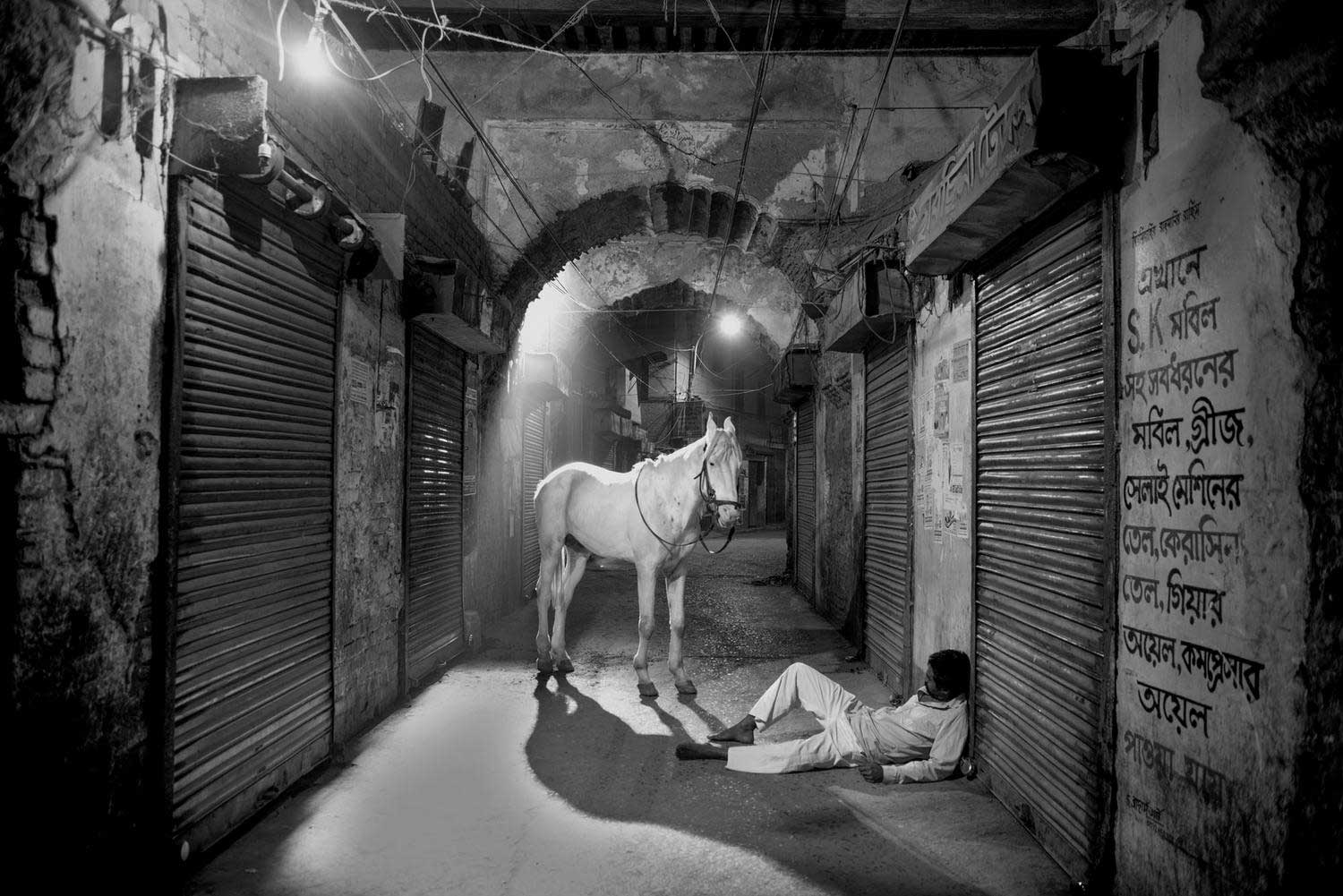
Kheyal by Munem Wasif; Photo © Artist
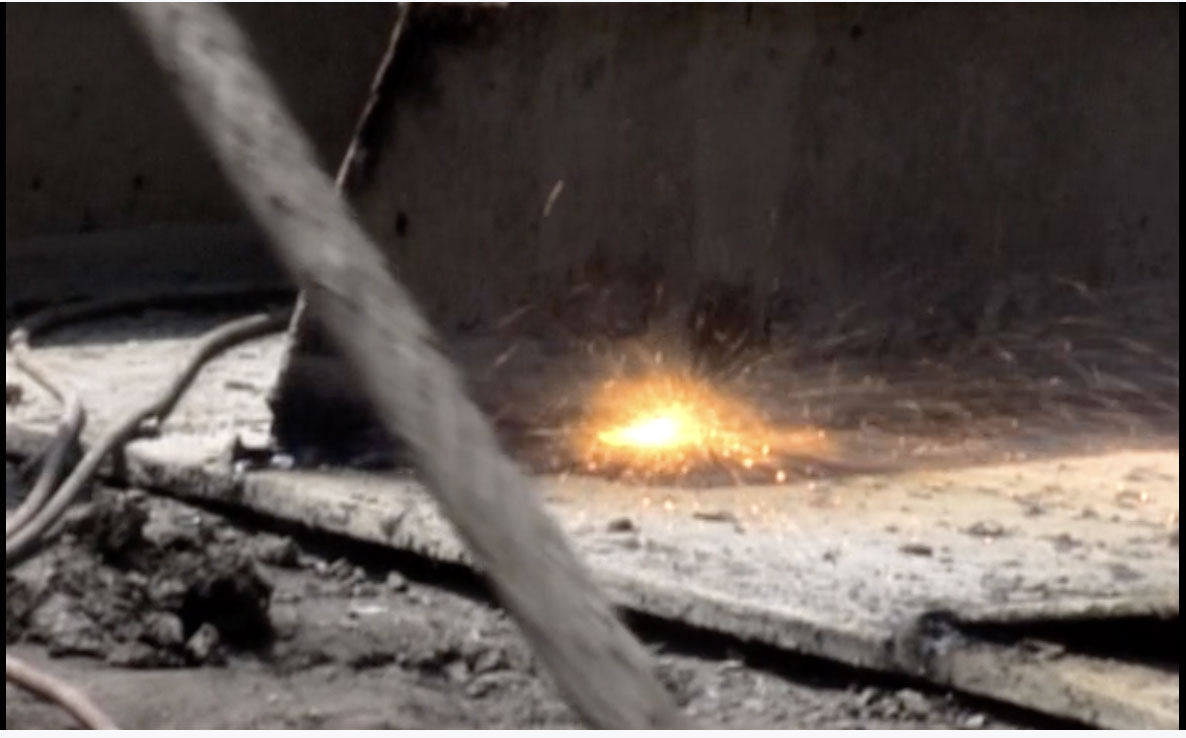
The Last Rites by Yasmine Kabir; Photo © Artist
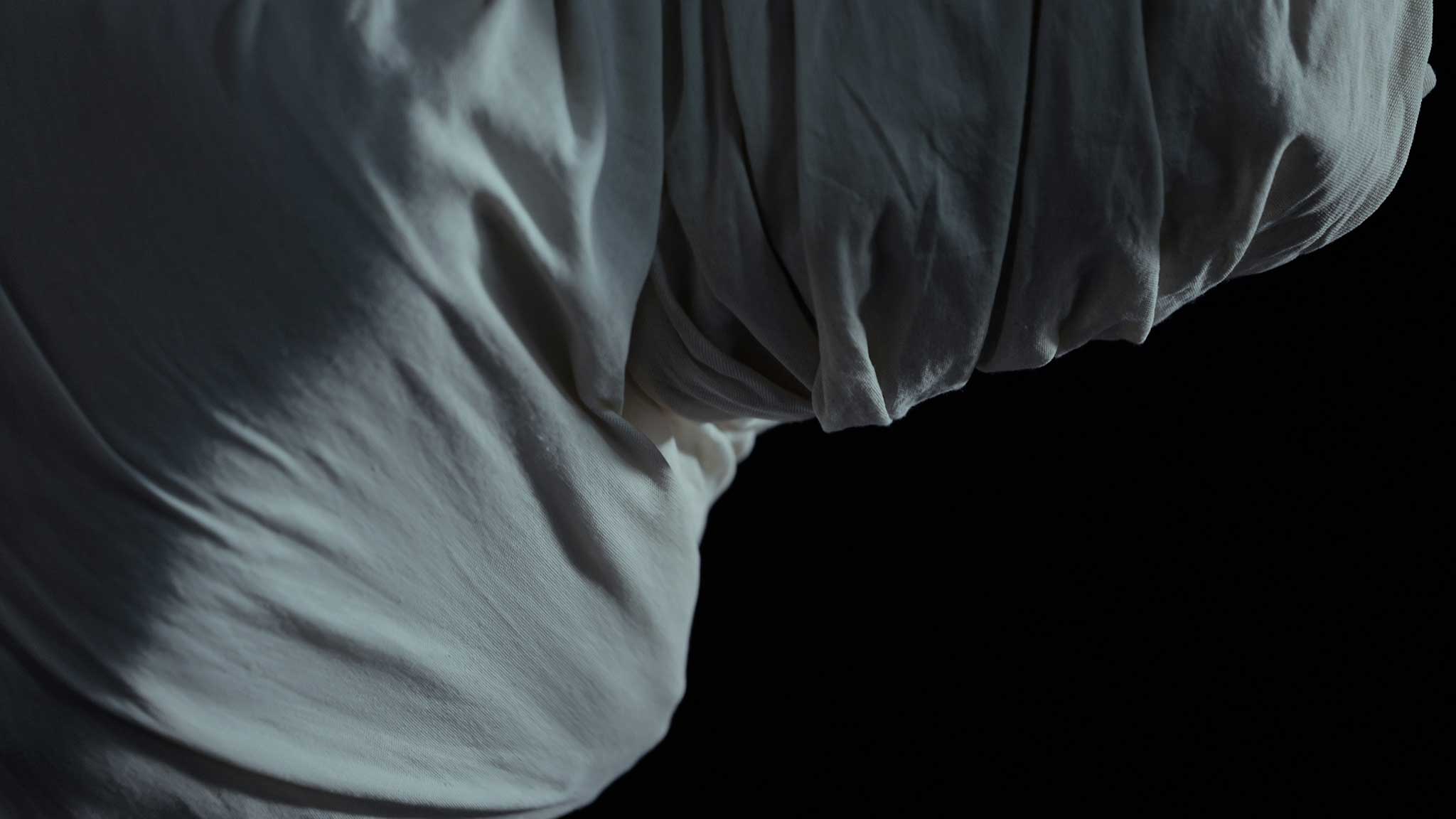
Shabnam by Reetu Sattar; Colour, stereo sound, 16:9, Bangla and English, 22:32, 2022-2023; Photo © Artist
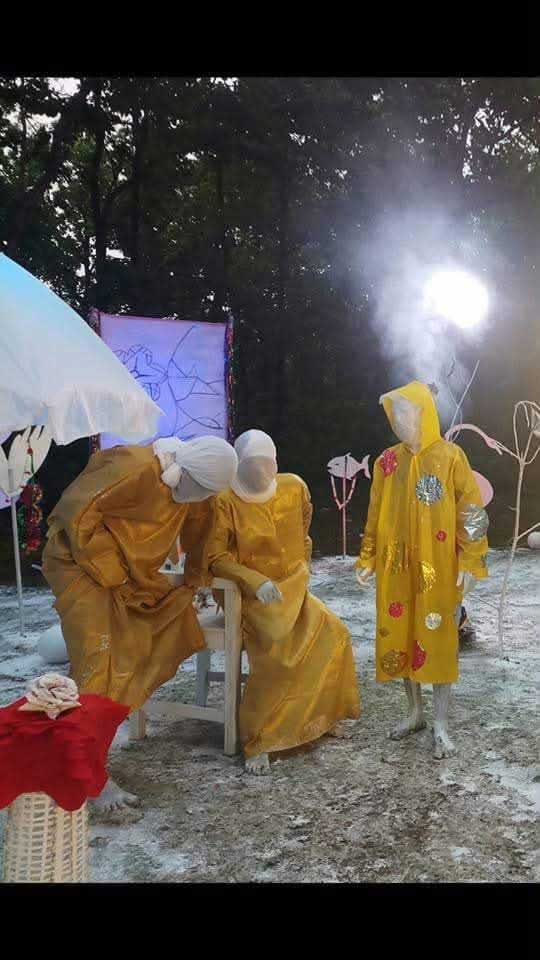
The Seventh Mokam by Ronni Ahmmed, A VR film, Photo © Bengal Art
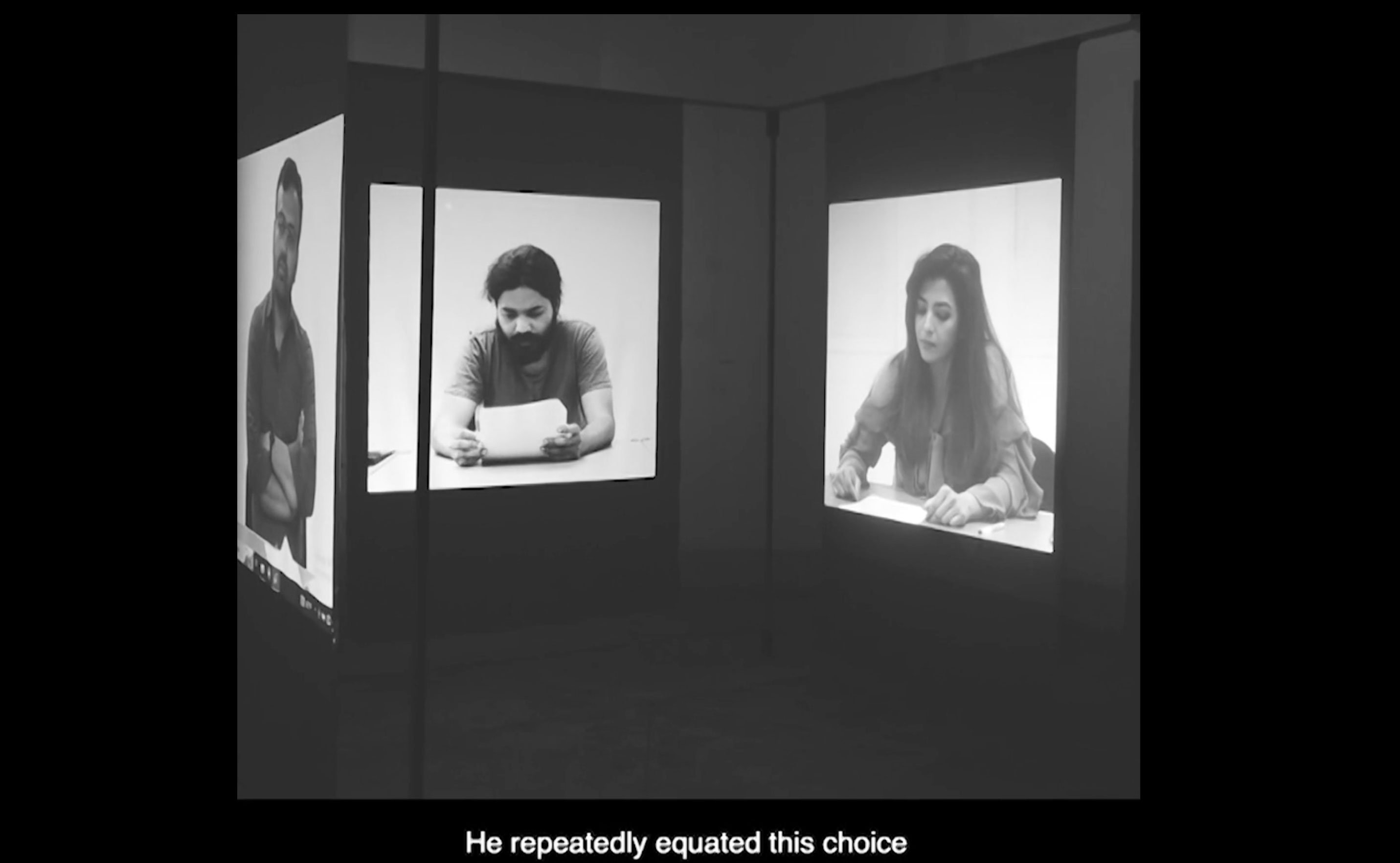
Stab in the Dark by Zihan Karim; Photo © Artist
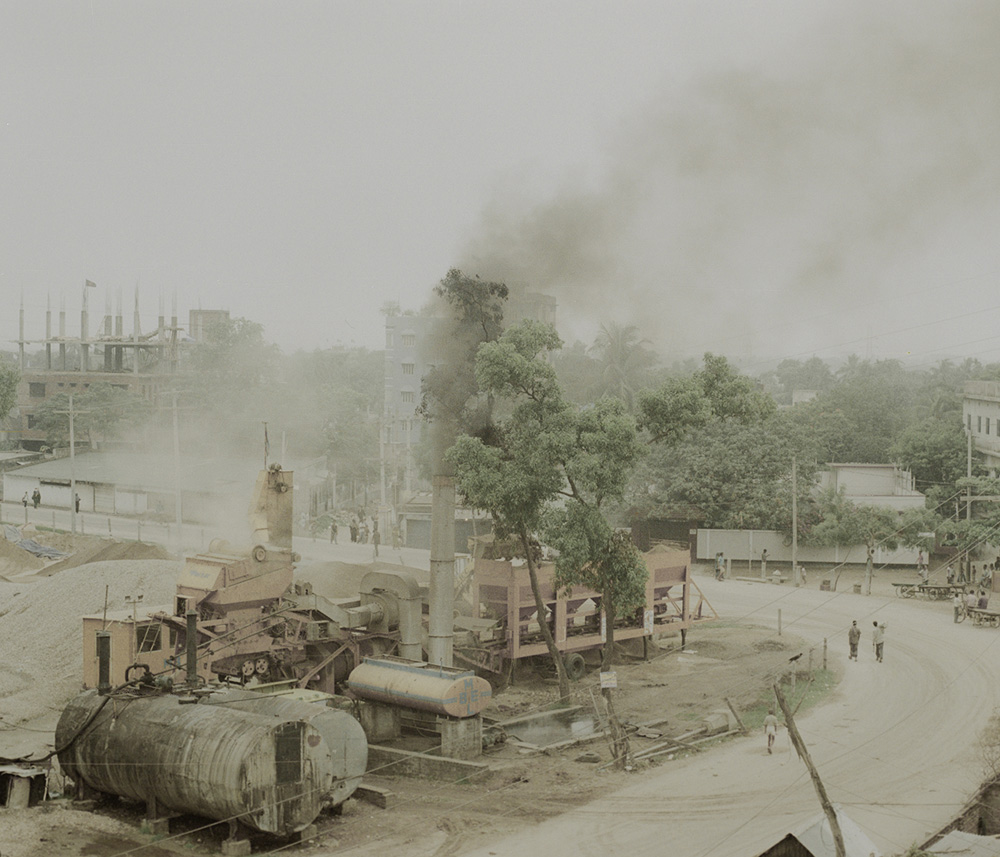
Desperate Urbanisation by Rasel Chowdhury; Photo © Artist
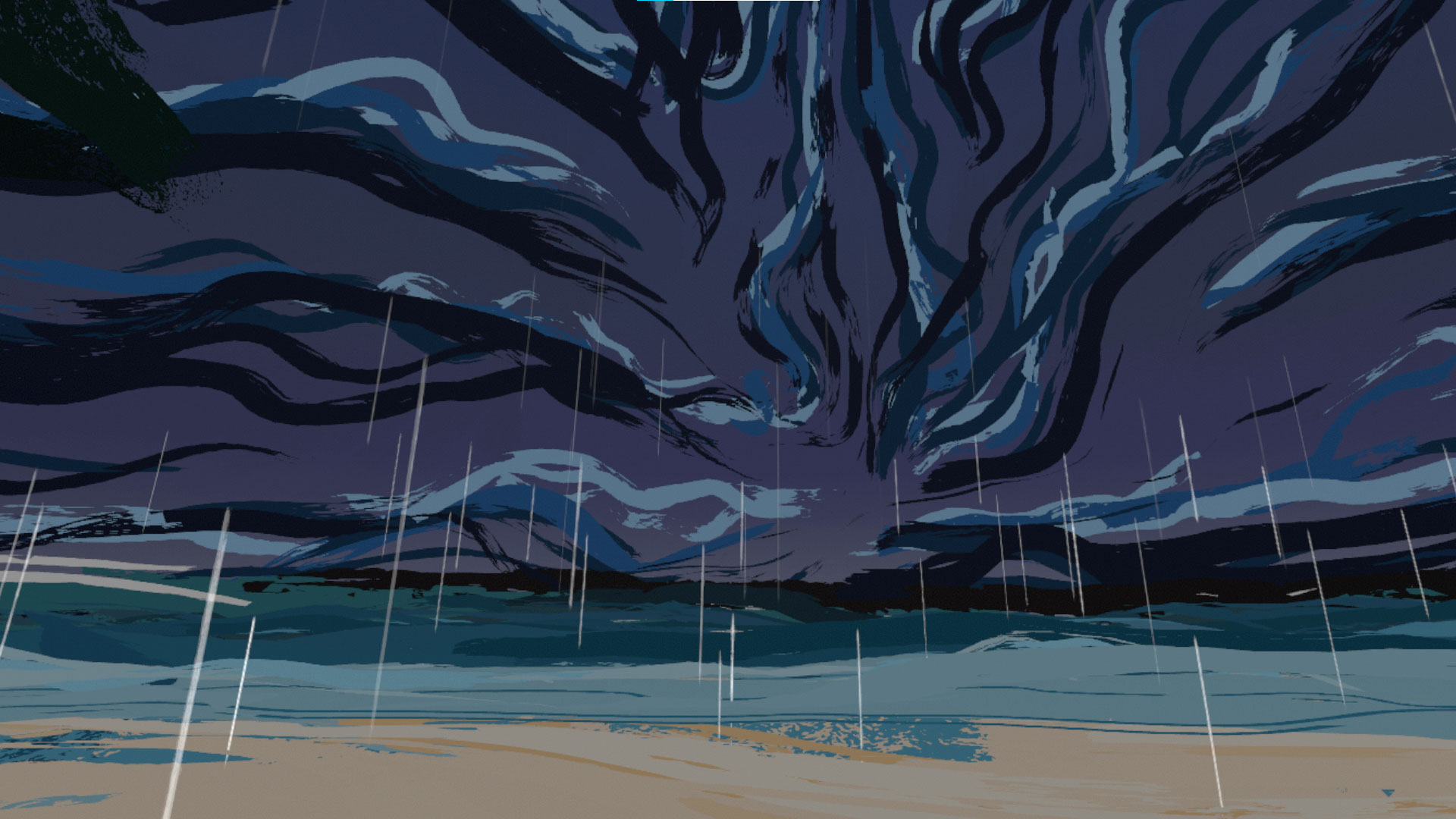
Anticipation of Rain by Naima Karim; VR film with sound and smell, Photo © Artist
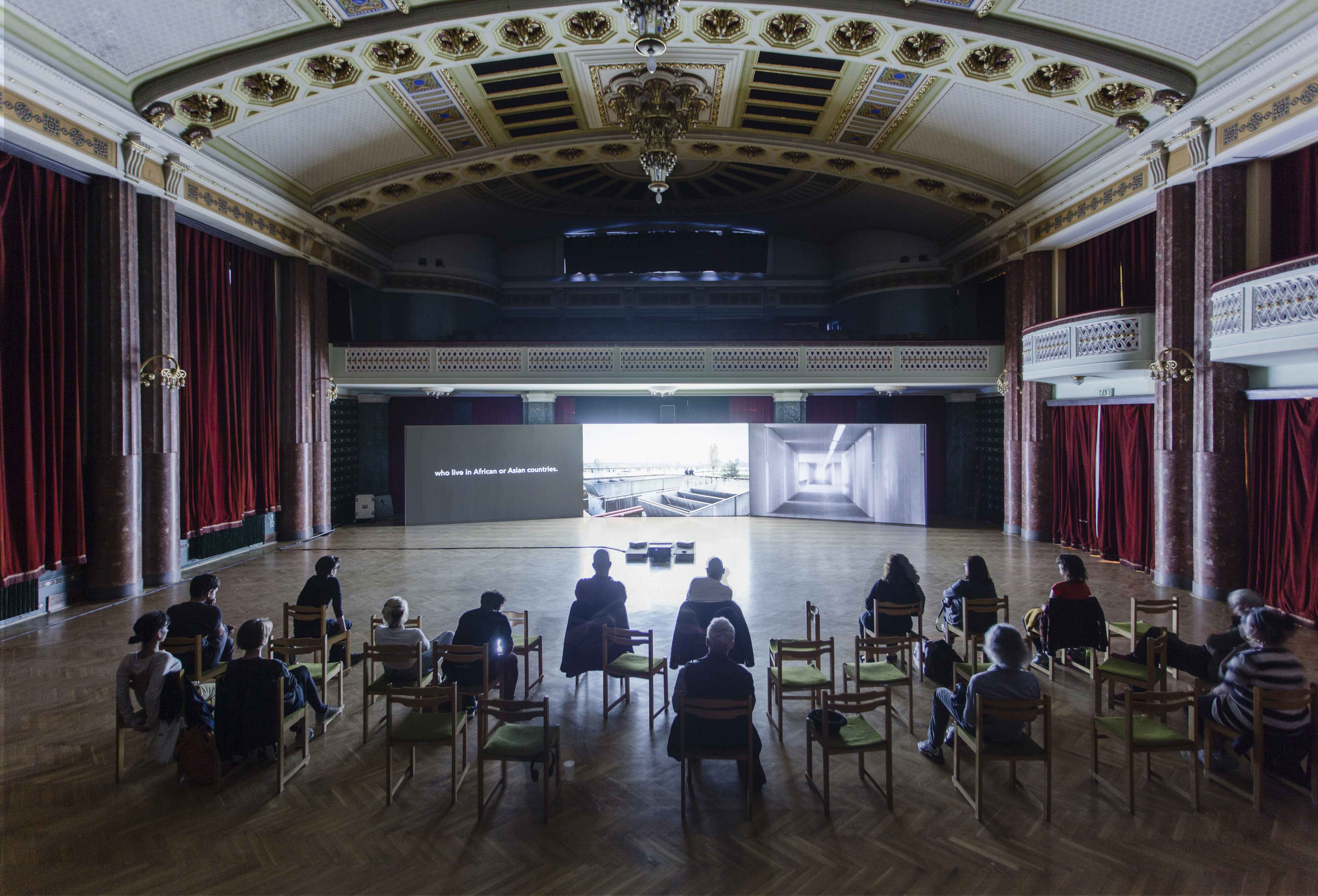
Two Meetings and a Funeral (2017) by Naeem Mohaiemen, installation view at Tranzit, Hungary; Photo © Artist and Tranzit
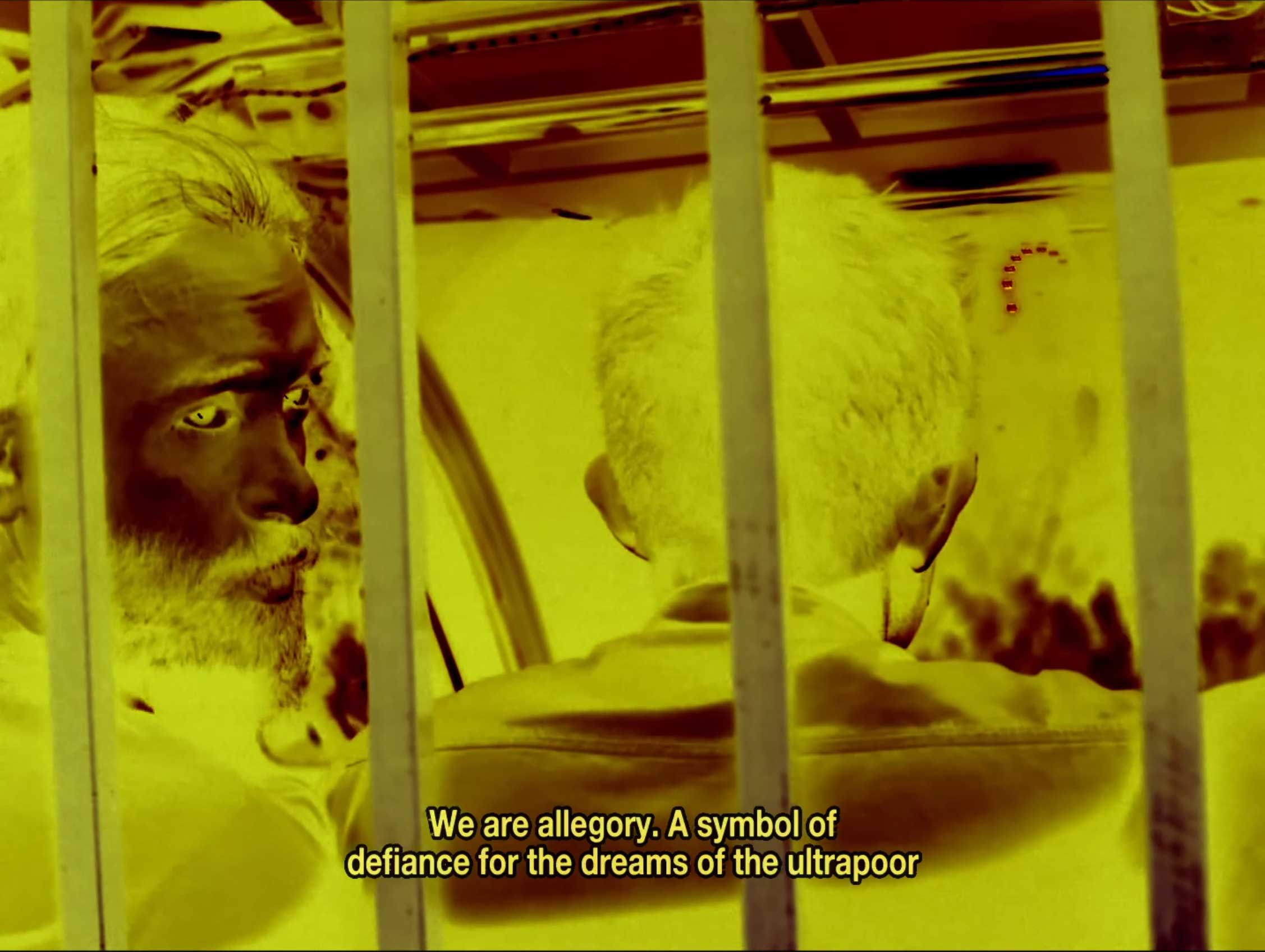
BAN♡ITS by Omar Adnan Chowdhury: film still, single-channel video, 17 min 43 sec, colour, stereo. Featuring Satej Chowdhur; 2024–25; Photo © Artist
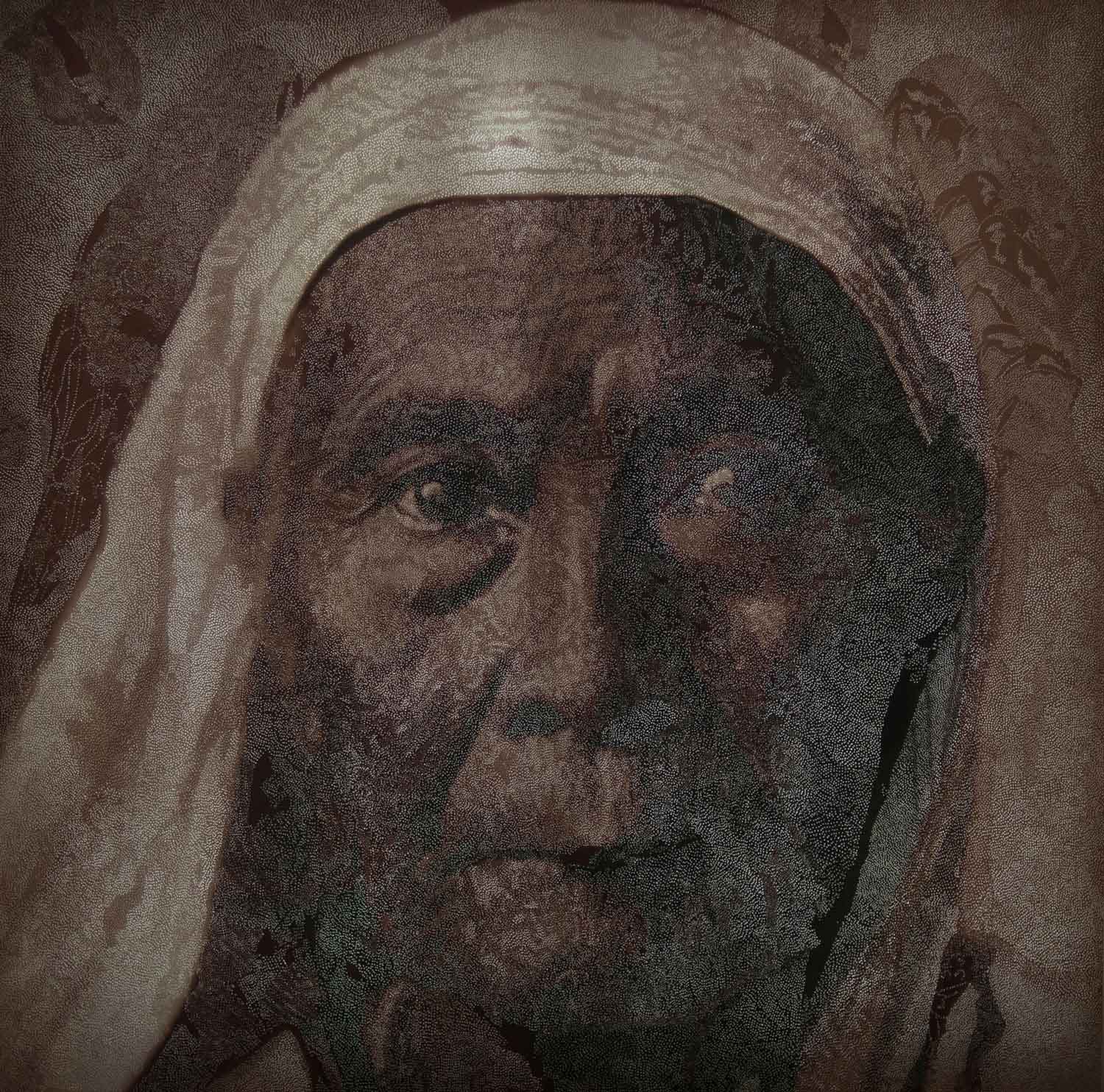
Parables of the Womb (2020) by Dilara Begum Jolly, Needling on photograph series, each size 86 x 86 cm, year 2018-2019 [Needling on archived portraits of birangonas (war hero) of the liberation War of 1971]; Photo © Artist
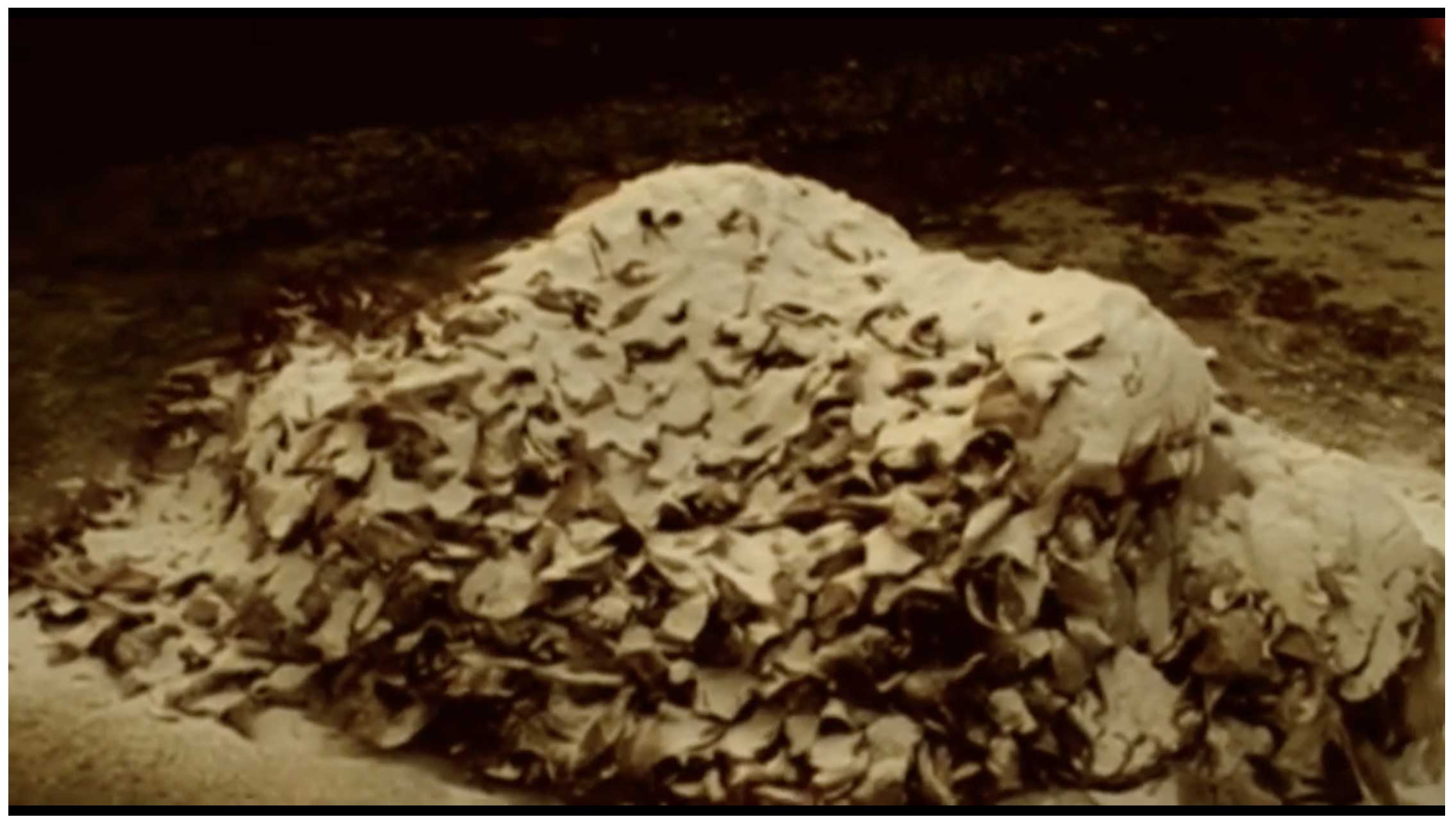
Tajreen-nama (the Saga of Tazreen) by Dilara Begum Jolly, Performative video art, Duration 7.32 min, Year 2013; Photo © Artist
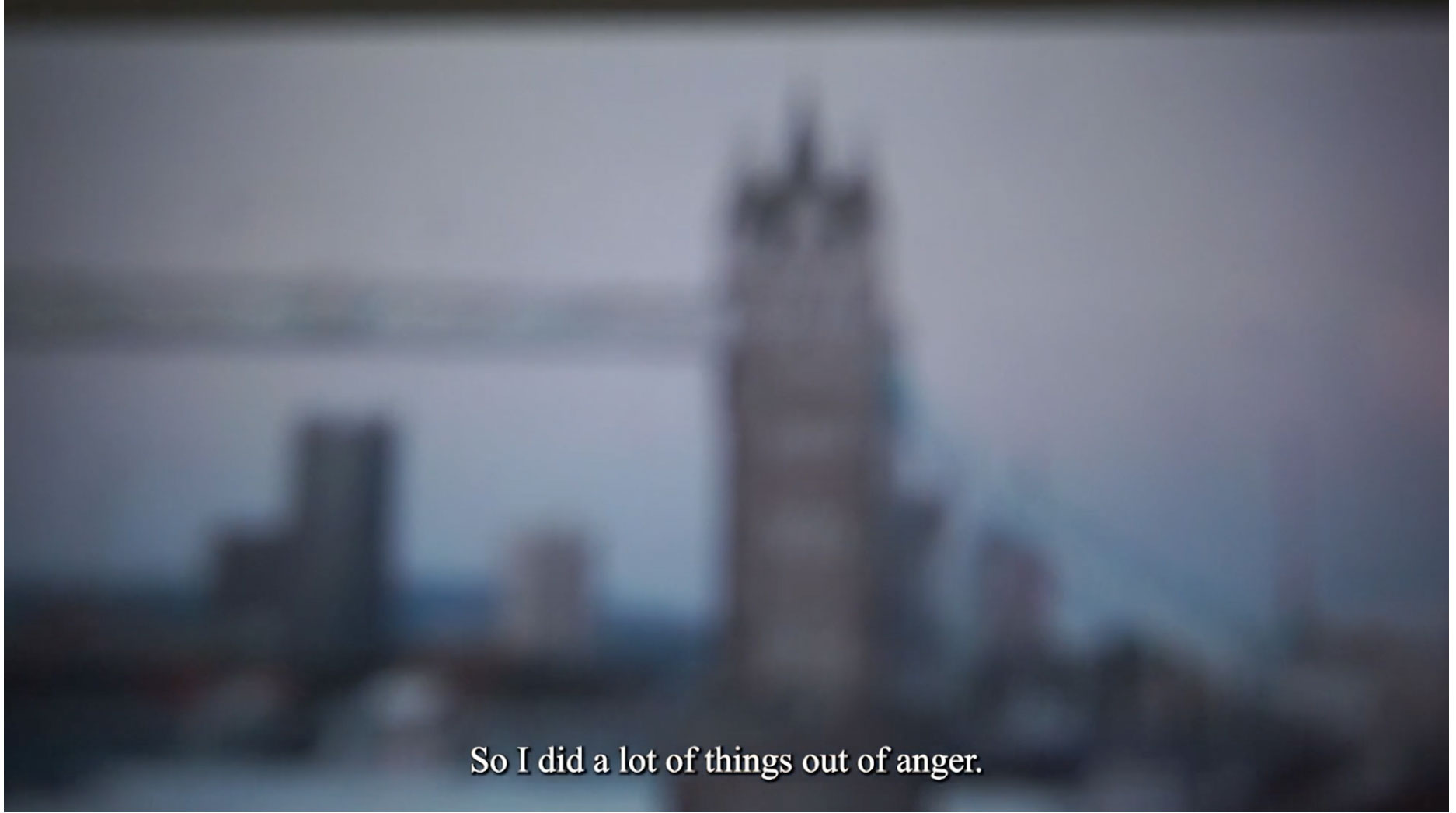
The Purpose was to Document the Other Side by Laisul Hoque, moving image, 2023; Photo © Artist
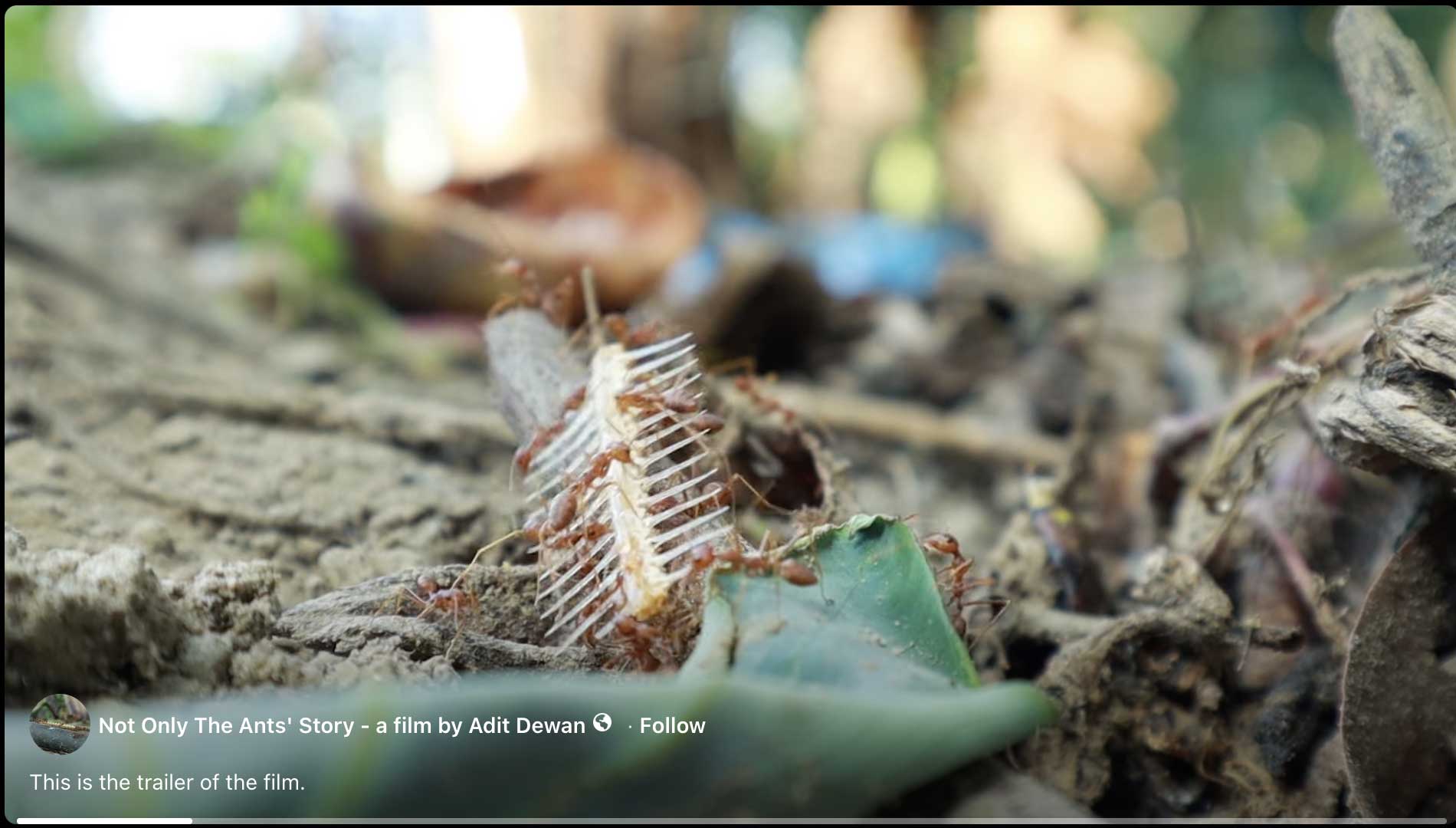
Not Only the Ants' Story by Adit Dewan, Film 2024; Photo © Artist
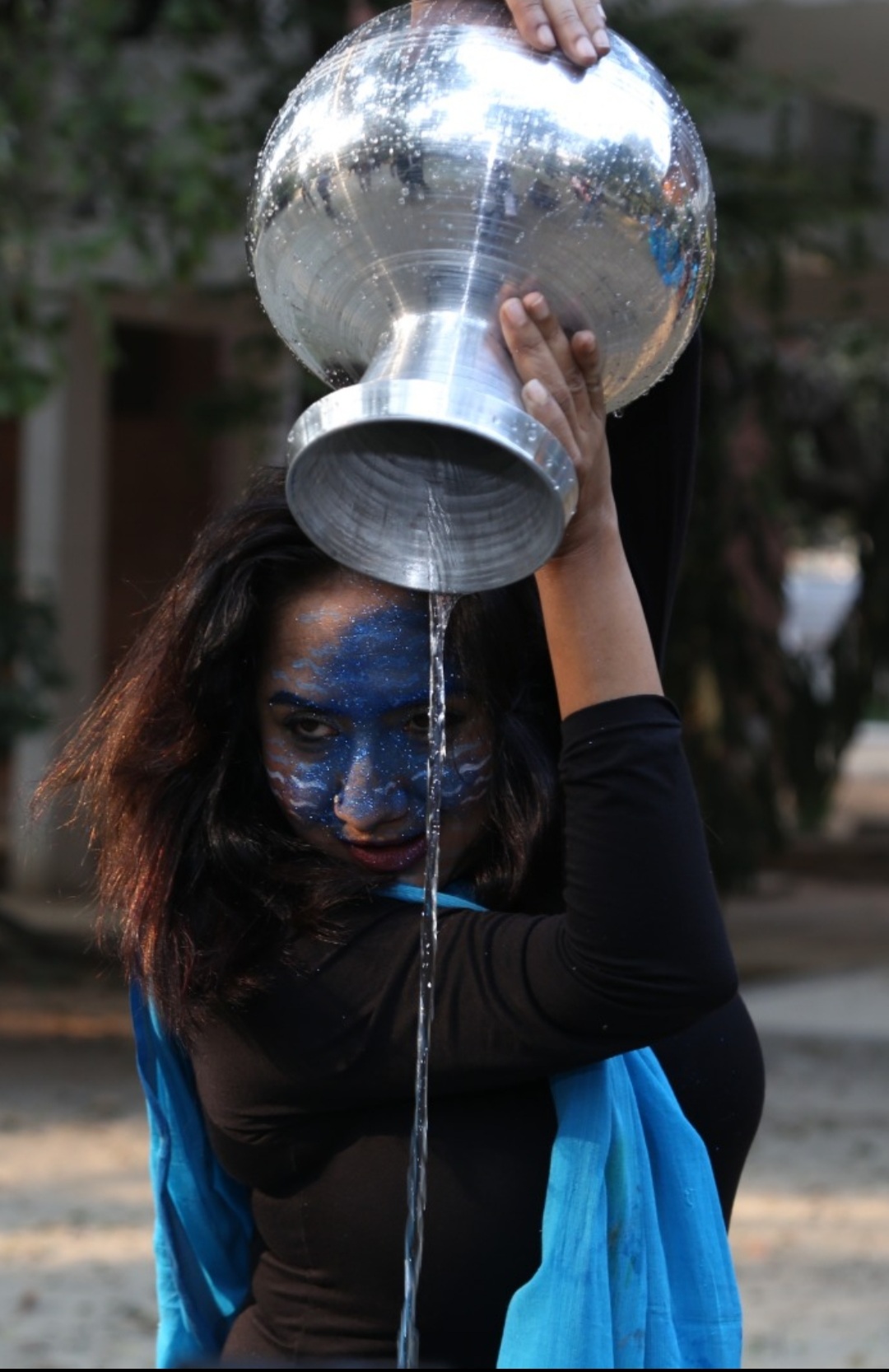
Jolkonya by Preema Nazia Andaleeb, long Durational Performance, 2023; Photo © Artist